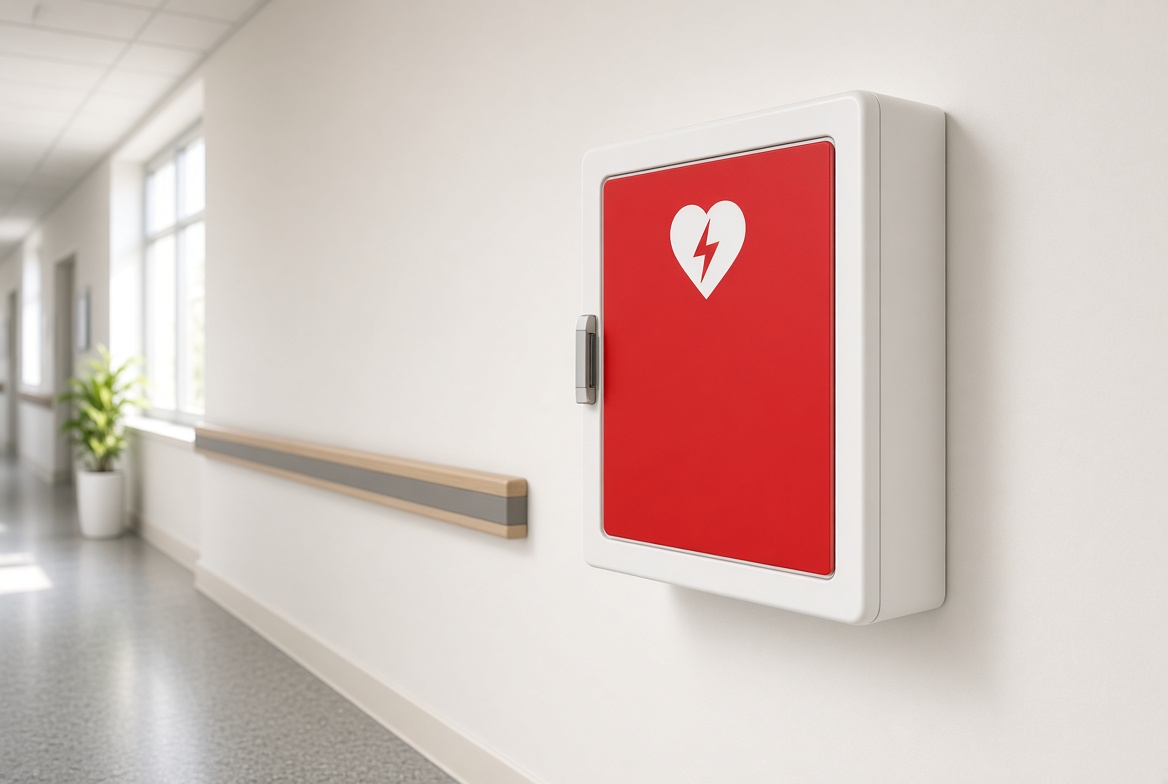
In an emergency, call 911 and start compressions. Send someone for the AED. Do not leave the person if you are alone and do not know where a device is.
What it does
An automated external defibrillator reads the heart rhythm through pads on the chest. Some cardiac-arrest rhythms can be reset with a shock. Many cannot. If no shock is advised, you return to chest compressions immediately.
Steps a bystander follows
- Turn the AED on and follow the voice prompts.
- Bare the chest and attach the pads as shown on the pads. One pad goes on the upper right chest, the other on the lower left side, for a typical adult placement.
- Plug in the connector if it is not already attached.
- Stop touching the person while the AED analyzes.
- If a shock is advised, make sure no one is touching the person, then press the shock button if the unit asks you to. Some units shock automatically.
- Resume compressions as soon as the prompt says to. The AED will recheck the rhythm about every two minutes.
Practical points
Remove medication patches if they are under a pad, and wipe the skin if it is very wet. A pacemaker bulge should not sit directly under a pad. Pediatric pads, or a pediatric mode, are used for infants and small children when the unit provides them. If only adult pads are available, use them rather than delay.
An AED does not replace CPR. Compressions keep a little blood moving until a shockable rhythm is treated or a professional team arrives.